
League of Legends has had dozens of champions cross 55%, even 60% win rate in a single patch. That’s not what makes a release “broken.” What makes  Mordekaiser Mordekaiser top the most broken champion in the game’s history is what happened after his June 2019 rework went live: Riot pulled the emergency lever and shipped a hotfix in two days — the fastest top-to-bottom correction the balance team had ever executed on a freshly reworked kit. That response time, not the win rate alone, is the real story, and it set a precedent that shows up again and again in the years since.
The Rework That Broke Top Lane in 48 Hours
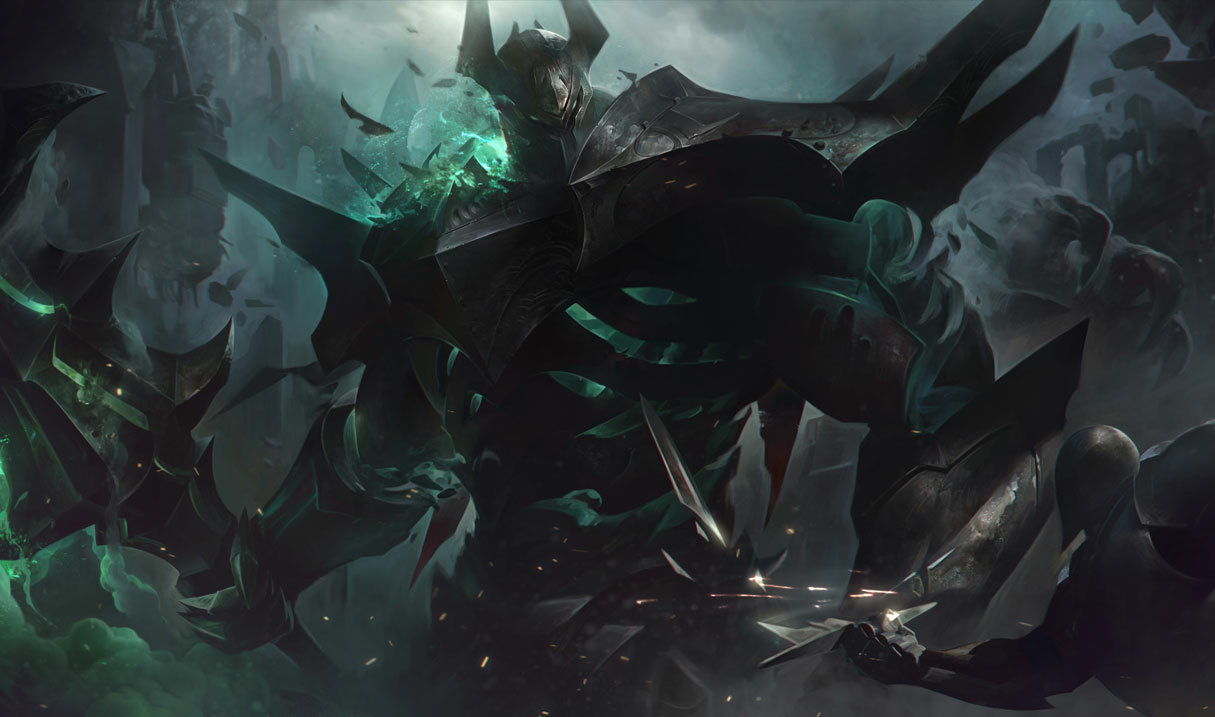
Mordekaiser’s rework went live in Patch 9.12 on June 11, 2019, rebuilding him from an AP mid-lane relic into a top-lane duelist built around dragging enemies into his Realm of Death for an isolated 1v1. Within days he had the second-highest win rate of any top laner in the game at 54%, the highest top-lane pick rate at 13%, and — the number that actually alarmed Riot — a 67% ban rate, the highest of any champion in the game at the time. A champion getting banned two out of every three games isn’t a strong pick. It’s a pick the playerbase has collectively decided it refuses to face.
Riot didn’t wait for the next scheduled patch. Two days after Mordekaiser hit live servers, the balance team shipped a standalone hotfix that cut his base attack damage from 65 to 61, dropped his base armor from 39 to 37, and reduced both his magic resist and armor growth per level. His signature ability, Darkness Rise, took the heaviest hit: base damage fell from a 10–35.5 range to 8–25, its movement speed bonus was reworked from a flat 5–10% at levels 1–6 to a slower 3/6/9% curve across levels 1/6/11, and its percentage-damage scaling dropped from 1–6.1% down to 1–5%. That’s not a routine balance pass — that’s a champion getting rewritten twice in one week.
What makes this the benchmark case isn’t just the size of the numbers. It’s the speed. In 2019, a 48-hour standalone hotfix for a single champion was rare enough to make gaming news on its own. Riot doesn’t usually break its own patch cadence for one kit, which is exactly why Mordekaiser’s rework became the reference point every subsequent “was this too strong on release” conversation gets measured against.
Udyr Proved It Wasn’t a Fluke

 Udyr Udyr jungle gave Riot a near-identical problem eighteen months later. His early-2021 rework landed with a 54.01% win rate at Platinum and above — almost the exact number Mordekaiser posted in 2019 — paired with a 62.7% ban rate. Riot’s own Gameplay Design Director, Mark “Scruffy” Yetter, publicly confirmed the champion was getting major nerfs, and Patch 11.5 delivered them.
The gap between the two cases is the timeline, and it’s instructive. Mordekaiser got hit in 48 hours with a standalone hotfix. Udyr’s correction rode the normal two-week patch cycle from Patch 11.3 to Patch 11.5 — no emergency intervention, no mid-cycle hotfix. Riot let the data accumulate through a full cycle before acting, which is a meaningfully slower response than the 2019 precedent despite a near-identical stat line. That’s not because Udyr was less of a problem; a 62.7% ban rate is arguably a louder signal than Mordekaiser’s 67%. It’s because by 2021, Riot’s balance team had more confidence in reading a rework’s real win rate through a full data cycle instead of panicking at the first spike.
The comparison matters because it shows the “broken rework, emergency response” pattern isn’t a one-time fluke tied to one champion or one balance team decision. It’s a repeatable failure mode of big kit reworks specifically — new mechanics create win-rate volatility that the PBE and internal playtesting consistently under-predict, patch after patch, champion after champion.
Briar Flipped the Formula: Broken From Being Too Weak

 Briar Briar jungle makes the “most broken” conversation more interesting because she broke in the opposite direction. At release in 2023, her win rate sat at 29.5% — one of the worst launch win rates any champion has ever posted. Riot shipped a hotfix buff that gave her more resilience, and within a single week her win rate had swung all the way up to 51%. That’s a 21.5-point win-rate movement inside seven days, which is a larger single-week swing than either Mordekaiser or Udyr produced in their emergency corrections.
Riot then spent the next several patches nerfing her back down. Patch 13.19 cut her attack speed growth per level from 2.5% to 2.3% and reduced her bite damage against minions and monsters from 20% to 10%, while adjusting her healing curve. That wasn’t the end of it — she took further nerfs in Patches 13.22, 13.23, and 13.24 as her win rate kept settling above target across four consecutive patch cycles.
Briar is the case that proves “broken” isn’t a synonym for “overpowered.” A champion whose win rate swings 20+ points in either direction inside a week is broken in the same functional sense Mordekaiser was — the balance team’s pre-release model of the kit was wrong, and live data had to correct it in public, in real time, with real players’ ranked games as the test bed. The only difference is which side of 50% the correction moved from.
What Riot Actually Learned: The Hotfix Became Policy
Line up all three cases and a clear trend appears. In 2019, a standalone 48-hour hotfix for one champion was rare enough to be the headline. By 2021, a near-identical stat line got a slower, more measured response over a full patch cycle — Riot trusted its own data pipeline more, but still treated the situation as exceptional. By 2023, Briar received a hotfix buff within days of launch and then absorbed nerfs across four separate patches without any of it being treated as a crisis. What used to be an emergency became a known step in the process: ship the rework, watch the first week of ranked data, correct hard and fast if the numbers are extreme, then keep tuning for as long as it takes.
That’s the actual lesson — not “Mordekaiser was the strongest champion ever,” but that Riot has built an entire operational reflex around the fact that no amount of internal testing reliably predicts how a reworked or newly released kit performs against millions of real players. The response time to a broken release has never been the differentiator; it’s now assumed. What’s changed is how routine that response has become.
For players, this has a practical consequence that has nothing to do with nostalgia for old patch notes. A build guide, a tier list, or a “best champion” ranking written the week a rework or new release goes live is describing a snapshot that Riot’s own balance history says is likely to be wrong within days. Tools like buildzcrank exist precisely because that gap between “what a guide said last week” and “what’s actually strong after this week’s hotfix” is real and recurring — a real-time recommendation adjusts the moment the data does, instead of waiting for someone to rewrite an article. The pattern from Mordekaiser to Udyr to Briar isn’t an argument that static guides are useless; it’s a reminder that the freshest guide is only as good as the patch it was written against, and that patch has a documented habit of changing fast.
Frequently Asked Questions About League’s Most Broken Champions
What was the single most broken champion release in League of Legends history?
By response speed, Mordekaiser's June 2019 rework: a 54% win rate, 13% pick rate, and 67% ban rate in top lane forced a standalone emergency hotfix just two days after launch — the fastest full correction of its era.
How fast did Riot nerf Mordekaiser after his 2019 rework?
Two days. Riot cut his base AD, armor, and resistance growth, and reworked his signature ability's damage and movement speed scaling in a single standalone hotfix, without waiting for the next scheduled patch.
Was Udyr's 2021 rework also considered broken?
Yes. His rework produced a 54.01% win rate at Platinum and above with a 62.7% ban rate — the highest ban rate in the game at the time — and Riot confirmed major nerfs that landed in Patch 11.5.
What made Briar's 2023 release different from Mordekaiser and Udyr?
She broke in the opposite direction. Briar launched at a 29.5% win rate, one of the worst on record, then swung to 51% within a week after a hotfix buff — a bigger single-week win-rate movement than either of the other two cases, just measured from underpowered instead of overpowered.
Does Riot hotfix broken champions faster today than it did in 2019?
The response has become more routine rather than strictly faster in raw hours — but what was treated as a rare emergency in 2019 is now a standard, expected step after any major rework or release, with corrections spread across several patches instead of a single crisis fix.
None of these three champions were “broken” in the way players usually mean it — a kit so strong it never got touched. They’re broken in the more precise sense that matters for balance history: each one forced Riot to admit, in public and on a compressed timeline, that its pre-release read on a kit was wrong. Mordekaiser set the template for how fast that admission could happen. Udyr and Briar proved it wasn’t a one-off. If you want to see what the current version of that same correction cycle looks like, check the latest patch tier list or read up on why static build guides fall behind the moment a hotfix lands.